

If you own an RV, you already know that 12-volt DC (direct current) power is the lifeblood of almost everything onboard - from water pumps to interior lighting, fans and more. An essential skill with installation of any Boogey Lights® LED product is knowing how to correctly wire the product to a 12vdc circuit. This includes understanding the importance of having a properly sized fuse at the power source, polarity, how to properly seal an electrical connection, using properly sized wire gauge for the load, measuring voltage and measuring the additional amperage draw you're adding. When you upgrade your RV's awning light to a brighter LED light or add additional LED lights like Boogey Lights® under-glow lighting, you’re adding a noticeable improvement in illumination. But there’s one key difference many RV owners don’t expect: Boogey Lights® LEDs draw more amperage than the less expensive factory-installed lights they replace. This article explains why that happens, what it means for your RV’s electrical system, and how to keep everything safe and reliable.
VOLTS, AMPS, WATTS
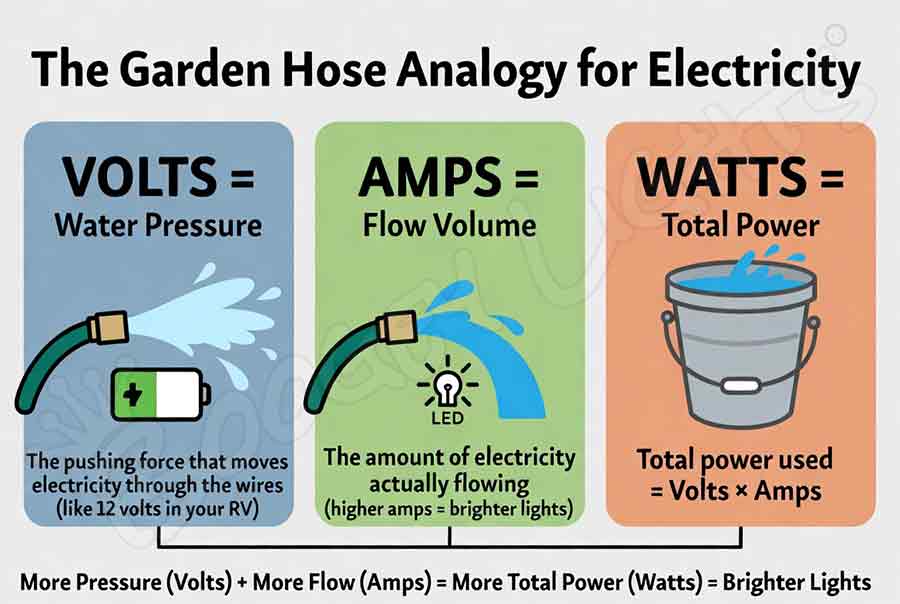
Let’s start with the three basic building blocks of electricity: VOLTS, AMPS, and WATTS.
- Volts (V) measure the “pressure” pushing electricity through a circuit. Your RV’s house battery normally sits around 12–12.6 V when fully charged and at rest.
- Amps (A) measure the actual flow or volume of electricity moving through the wires, switches, and fuses.
- Watts (W) measure the total power being used. The simple formula is: Watts = Volts × Amps.
Think of it like water flowing through a garden hose. Voltage is the water pressure, amperage is how much water is flowing, and wattage is the total work being done (how hard the lights are shining). A higher wattage light needs either more pressure (higher voltage) or more flow (more amps) to operate.
LEDS ARE MORE EFFICIENT — but ...
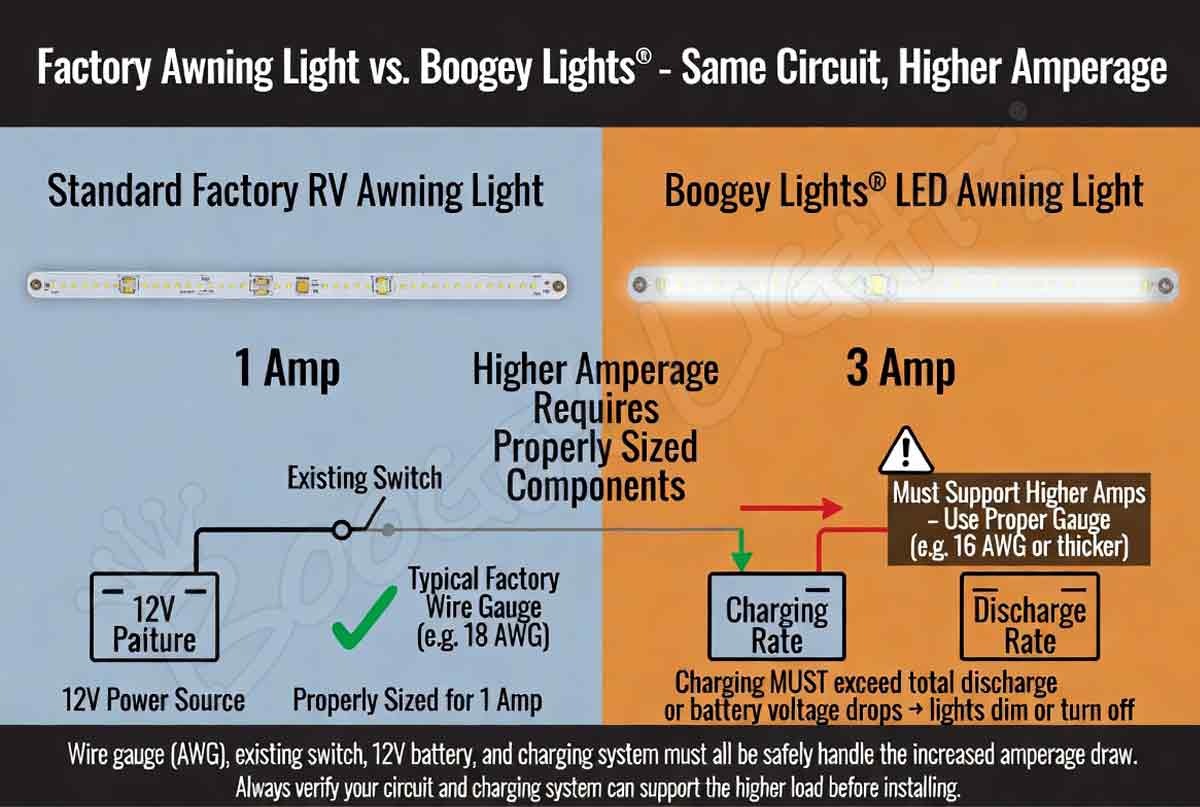
LEDs are far more efficient than incandescent bulbs, which is why everyone says “LEDs save power.” That’s true when you compare them to the old bulbs. But within the LED world, brightness is directly tied to how much current (amps) the diodes draw. Our Boogey Lights® use larger, higher-output LEDs and more of them per foot than typical LED lighting. That extra light output requires more amperage - often 2× or 3× more than others. For example, a typical 16-foot factory awning light might pull about 1 amp when displying the color white, while our equivalent 16-foot strip pulls 3–3.5 amps depending on the brightness setting. The extra amps are the price you pay for noticeably brighter, more vibrant lighting.
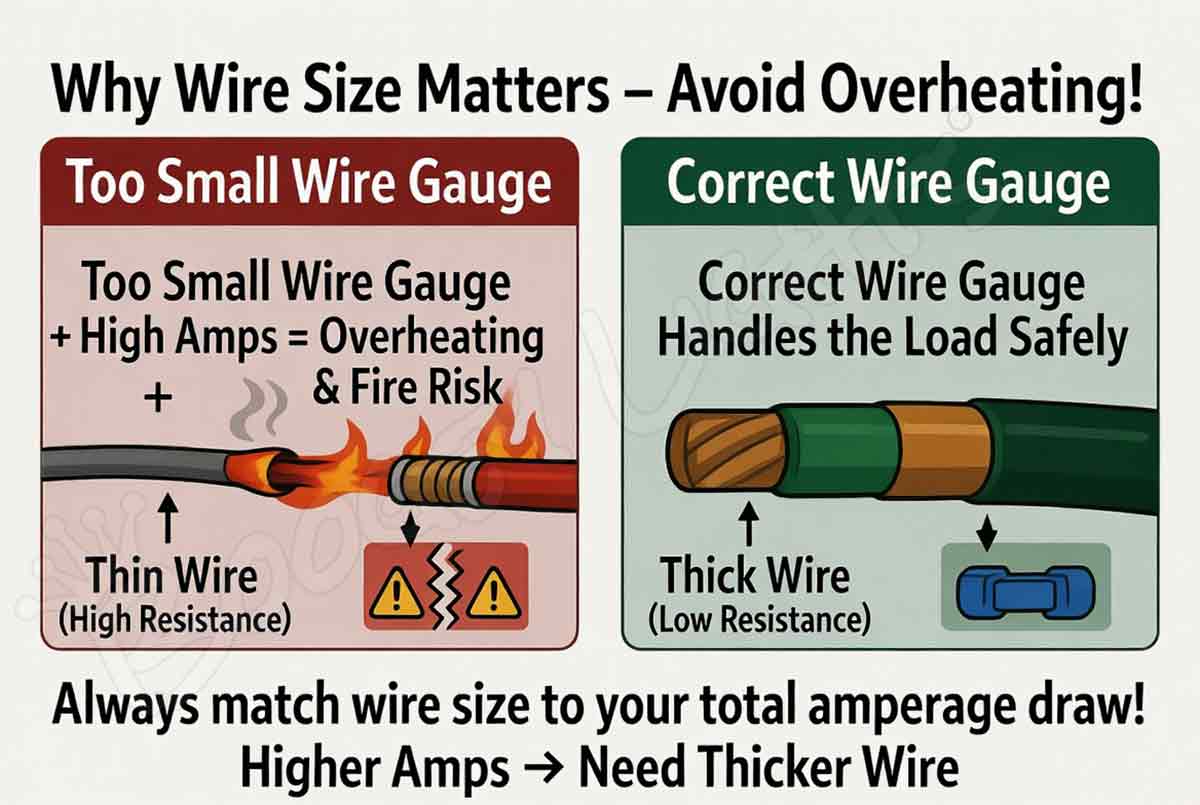
This difference matters because every RV circuit was engineered for a specific load - maximum amperage. In our exmple, the factory awning light, wiring, switch, fuse and power source were sized to support that 1 amp draw. When you swap in a brighter strip that draws 3+ amps, you are now asking that same circuit to carry three times the load. If the circuit is already near its limit, or if the wire gauge is too small, you can overheat wires, blow fuses, or even damage switches and controllers. And, if your 12vdc power supply doesn't have the amperage to support the additional load, the lights will dim or won't light at all. That’s why we include detailed amperage specs on every product page and strongly recommend checking your existing circuit before installing.
HOW INPUT VOLTAGE IMPACTS AMPERAGE
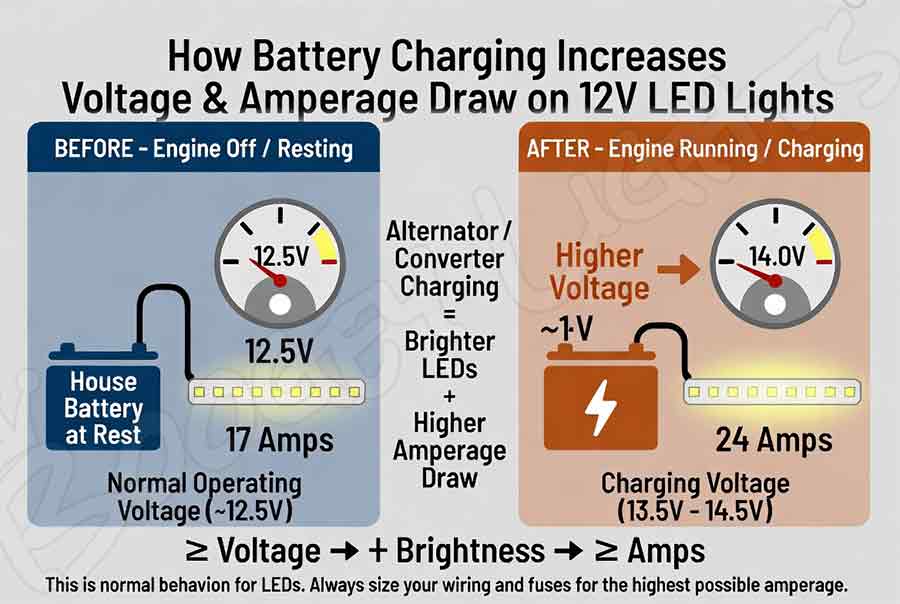
Another important factor is input voltage. Our amperage ratings assume an input voltage range of 12.5 V to 13.5 V. But real-world RV power isn’t constant. If the LEDs are connected to a 12v power that's being charged by an alternator, when the engine is running, the alternator often pushes 13.5–14.5 V into the batteries to charge them. RV converters/chargers as well as solar chargers do the same thing. Higher input voltage makes the LEDs shine brighter - but it also lets more current (amps) flow through them. A circuit that draws 18 amps at 12.5V can jump to 24 amps if the battery source is being charged at 14.5 V. The LEDs will get nice and bright but they'll also pull more amperage through the circuit. The LEDs aren’t “faulty”; they’re simply doing exactly what physics expects when you give them more voltage.
That’s why we always say: know your power consumption. Measure the actual voltage and amperage of your circuit under real conditions. For most RV owners who connect directly to the house batteries (the recommended method), voltage spikes are minimal because the converter or inverter regulates charging however some of these charging systems can jump to 14 or more volts. It's important to understand how your RV's charging system works. Motorhomes, tow vehicles, or semi-trucks that tap into the starter battery are more likely to see big voltage swings and need extra care. Regardless, you always want to make sure the circuit (wiring, switches, fuses and power supply) are sized for the max voltage / max amperage draw.
The good news? Once you understand these basics, upgrading to brighter Boogey Lights® is straightforward and safe. Our single-color LED strips can in most cases be a direct replacement for most factory awning lights, provided you verify that the existing wiring and fuse can handle the extra amperage. We’ve included full amperage charts, wiring diagrams, and direct-replacement instructions right on the product page.
Electricity is forgiving when you respect it - and unforgiving when you don’t. We urge customers to take a few minutes to understand volts, amps, and how voltage affects your new LEDs when installed in your RV’s electrical system. You’ll enjoy dramatically better lighting without surprises.
Confused? If you are uncertain or unfamiliar with any of the concepts presented here, we urge you to ask someone who has the knowledge to assist you with your Boogey Lights® installation.